

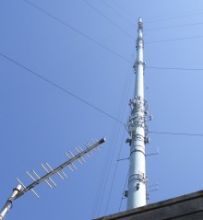
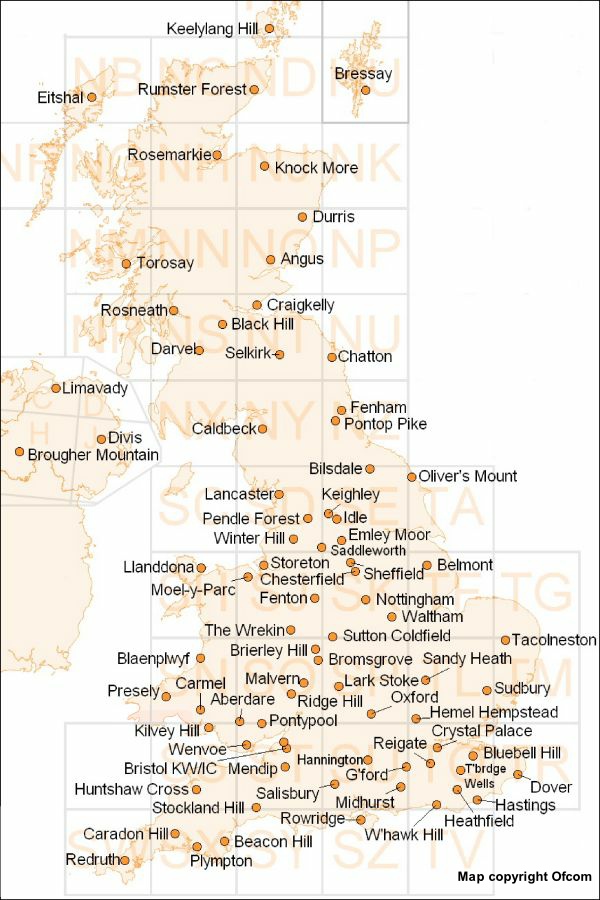
Not entirely co-incidentally, these were the original 80 preswitchover digital transmitters, plus 12 more added during the 700MHz clearance.
In addition, there are just under 1100 smaller repeater transmitters, but they only transmit the first 3 MUXES (the PSBs), not all 6 of them. That said, these three PSBs include all the main channels and the six HDTV channels.
Details of local repeaters are available on the DUK postcode predictor by putting in a local postcode.
Officially 90% of the population can get on a 6 MUX transmitter, that is to say 10% (= 6 million people) can only get on a 3 MUX repeater. I have to say I think that's rubbish. I spend far too much time looking at TV aerials all over the country and I'm sure the number of people able to get on a 6 MUX TX is far higher than 90%. The four most important points to bear in mind are:
1 - Many people are on a small repeater transmitter when they don't even need to be on one. This is mainly due to lazy or incompetent installers. Having said that, before Digital (certainly before C5) it made no difference to how many channels the customer would receive so the aforementioned installers would just go for the easiest option (Oughtibridge in this case ! ) which they knew would work at the locality.
2 - Since the 2008 to 2012 switchover (and many aerials were installed before this) the transmission power has been hugely increased, often by a factor of 10.
3 - There may be around 1100 repeater transmitters, as against only 50 main transmitters, but the 30 largest repeaters (by far the biggest in terms of population coverage) transmit all 6 MUXES. Sheffield is technically only a repeater transmitter but I reckon its coverage must be bigger than at least a dozen "main" transmitters. Many of the smaller 3 MUX repeaters only transmit to a few hundred people, some to less than that.
4 - I'm sure there are a huge number of sites which can't get on a 6 MUX transmitter, but generally there aren't many people (relatively speaking) living in those localities.
The information below includes the all the 6 MUX transmitters' locations, their digital power outputs, their polarity*, if they have changed group (i.e. required a new aerial at digital switchover) and last, but by no means least, the aerials we recommend for them.
* e.g. BH indicates a B group Horizontally polarised transmitter.
If you're on one of the smaller three MUX repeaters (see "which transmitter am I on?") and you want all six digital Freeview MUXES you'll have to try and get onto one of the transmitters listed below. You could try realigning your aerial (though you may well have to re-polarise it) and then retuning. You will also have to check both transmitters are the same group, this is not required if you have a wideband aerial, though W/Bs have lower gain than a grouped aerial, particularly an A group.
If you get a signal but it's not as good as you want, you could upgrade the aerial, but you could also try a mast head amplifier or repositioning your aerial.
And don't forget the cable (and any crappy wall plates).......
A
Aberdare SO 034 013, 3 miles SSW of Merthyr.
All 6 MUXES are transmitted at 100W
Was originally an AV group for analogue and still is AV for all the digital.
For the most up to date MUX to channel allocations put this postcode CF44 0DA into the DUK checker
For Aberdare we recommend the Yagi10K for strong signal areas, the Log36 or Yagi18K for medium signal areas, the Yagi18A or XB10A for poor signal areas and the XB16A for those with the most marginal signals. The dimensions and test performance of the aerials can be found on the relevant buy pages.
See the wrong aerial for any A group transmitter.
Angus NO 394 407, 5 miles N of Dundee
MUXES 1 to 3 are transmitted at 20kW and MUXES 4 to 6 at 10kW.
Was originally a C/DH group for analogue and then digital, but it became a KH (CHs 33 to 48) in Nov 19.
For the most up to date MUX to channel allocations put this postcode DD4 0RQ into the DUK checker
For Angus we recommend the Yagi10K for strong signal areas, the Log 36 or Yagi18K for medium signal areas, the Yagi18K or XB10K for poor signal areas and the XB16K for those with the most marginal signals. The dimensions and test performance of the aerials can be found on the relevant buy pages.
Ashford TR 011 429, Centre of Ashford.
All 6 MUXES are transmitted at 500W.
Ashford is a new TX (March 18) and is KV group.
For the most up to date MUX to channel allocations put this postcode TN24 8DF into the DUK checker
For Ashford we recommend the Yagi10K for strong signal areas, the Log 36 or Yagi18K for medium signal areas, the Yagi18K or XB10K for poor signal areas and the XB16K for those with the most marginal signals. The dimensions and test performance of the aerials can be found on the relevant buy pages.
Note that Ashford, Margate & Dover are a Single Frequency Network.
B
Beacon Hill SX 857 619, 4 miles WSW of Torquay.
20kW output for MUXES 1 to 3, and 10kW for MUXES 4 to 6.
Was originally a C/DH group for analogue and digital until Mar 2019 when it became a BH (CHs 40 to 47). Most C/D group aerials (or W/Bs) should still work though.
For the most up to date MUX to channel allocations etc put this postcode TQ3 1RT into the DUK checker
For Beacon Hill we recommend the Yagi10K for good signal areas, the Log 36 or Yagi18K for medium signal areas, the Yagi18B or XB10B for poor signal areas and the XB16B for those with the most marginal signals. The dimensions and test performance of the aerials can be found on the relevant buy pages.
Belmont TF 218 836, 16 miles ENE of Lincoln.
MUXES 1 to 3 are transmitted at 150kW, MUXES 5 & 6 at 100kW, and MUX4 at 50kW.
Was originally an AH group for analogue, then became a wideband for digital. However, in March 2020 it reverted to AH.
For the most up to date MUX to channel allocations etc put this postcode LN8 6JT into the DUK checker
For Belmont we recommend the Yagi10K for strong signal areas, the Log36 or Yagi18K for medium signal areas, the Yagi18A or XB10A for poor signal areas and the XB16A for those with the most marginal signals. The dimensions and test performance of the aerials can be found on the relevant buy pages. See Belmont Graph and the wrong aerial for any A group transmitter.
Bilsdale SE 553 962, 15 miles SE of Middlesborough.
MUXES 1 to 3 are transmitted at 100kW and MUXES 4 to 6 at 50kW.
Was originally an AH group for the analogue channels but for all digital reception it's been a KH (or wideband) since DSO.
For the most up to date MUX to channel allocations etc put this postcode TS9 7JS into the DUK checker
For Bilsdale we recommend the Yagi10K for strong signal areas, the Log 36 or Yagi18K for medium signal areas, the Yagi18K or XB10K for poor signal areas and the XB16K for those with the most marginal signals. The dimensions and test performance of the aerials can be found on the relevant buy pages. See Bilsdale Graph.
Black Hill NS 828 647, 14 miles E of Glasgow.
Transmission power is 100kW for all six MUXES.
Was originally a BH group for analogue and still is BH for all the digital transmissions.
For the most up to date MUX to channel allocations etc put this postcode ML7 4NZ into the DUK checker
For Black Hill we recommend the Yagi10K for good signal areas, the Log 36 or Yagi18K for medium signal areas, the Yagi18B or XB10B for poor signal areas and the XB16B for those with the most marginal signals. The dimensions and test performance of the aerials can be found on the relevant buy pages. See Black Hill's Graph.
Blaenplwyf SN 569 757, 4 miles SSW of Aberystwyth.
40kW output power for MUXES 1 to 3 and 10kW for MUXES 4 to 6
Was originally an AH group for analogue and it's still an AH for digital.
For the most up to date MUX to channel allocations etc put this postcode SY23 4QH into the DUK checker
For Blaenplwyf we recommend the Yagi10K for strong signal areas, the Log36 or Yagi18K for medium signal areas, the Yagi18A or XB10A for poor signal areas and the XB16A for those with the most marginal signals. The dimensions and test performance of the aerials can be found on the relevant buy pages. See the wrong aerial for any A group transmitter.
Bluebell Hill TQ 757 613, 3 miles N of Maidstone.
Transmission power is 20kW for all six MUXES (SFN with Sittingbourne)
Was originally an EH group for analogue then became BH for digital. From the 18 Jul 18 it became KH (CHs 32 to 46), but all B and E group aerials (and W/Bs) installed pre switchover should still work afterwards.
For the most up to date MUX to channel allocations etc put this postcode ME5 9RD into the DUK checker
For Bluebell Hill we recommend the Yagi10K for strong signal areas, the Log 36 or Yagi18K for medium signal areas, the Yagi18K or XB10K for poor signal areas and the XB16K for those with the most marginal signals. The dimensions and test performance of the aerials can be found on the relevant buy pages. See Bluebell Hill transmitter's graph.
Bressay HU 503 387, 3 miles SE of Lerwick (Shetland Isles).
Transmission power is 2kW for MUXES 1 to 4, and 1kW for 5 and 6.
Was originally an AV group for analogue and still is AV for digital.
For the most up to date MUX to channel allocations etc put this postcode ZE2 9EL into the DUK checker
For Bressay we recommend the Yagi10K for strong signal areas, the Log36 or Yagi18K for medium signal areas, the Yagi18A or XB10A for poor signal areas and the XB16A for those with the most marginal signals. The dimensions and test performance of the aerials can be found on the relevant buy pages. See the wrong aerial for any A group transmitter.
Brierley Hill SO 916 856, SW suburb of Dudley.
Transmission power is 2kW for all 6 digital MUXES.
Was originally a C/DV group for analogue and initially for all the digital, but became an AV group in March 2018.
For the most up to date MUX to channel allocations etc put this postcode DY5 2PD into the DUK checker
For Brierley Hill we recommend the Yagi10K for strong signal areas, the Log36 or Yagi18K for medium signal areas, the Yagi18A or XB10A for poor signal areas and the XB16A for those with the most marginal signals. The dimensions and test performance of the aerials can be found on the relevant buy pages. See the wrong aerial for any A group transmitter.
Bristol Ilchester Crescent ST 577 700, SW Suburbs of Bristol.
Transmission power is 200W for MUXES 1 to 3 and 100W for MUXES 4 to 6.
Was originally a BV group for analogue and still is BV for all the digital.
For the most up to date MUX to channel allocations etc put this postcode BS13 7HU into the DUK checker
For Ilchester we recommend the Yagi10K for good signal areas, the Log 36 or Yagi18K for medium signal areas, the Yagi18B or XB10B for poor signal areas and the XB16B for those with the most marginal signals. The dimensions and test performance of the aerials can be found on the relevant buy pages.
Bristol Kings Weston ST 547 775, Western suburbs of Bristol.
Transmission power is 200W for all MUXES.
Was originally a BV group for analogue then went E group for digital until June 2019 when it became KH (CHs 22 to 46).
For the most up to date MUX to channel allocations etc put this postcode BS9 2QY into the DUK checker
For Kings Weston we recommend the Yagi10K for strong signal areas, the Log 36 or Yagi18K for medium signal areas, the Yagi18K or XB10K for poor signal areas and the XB16K for those with the most marginal signals. The dimensions and test performance of the aerials can be found on the relevant buy pages.
Bromsgrove SO 948 730, 10 miles SW of Birmingham.
Transmission power is 400W for all MUXES.
Was an AV group for analogue but for reception of all the digital reception MUXES it is now KV (or wideband).
For the most up to date MUX to channel allocations etc put this postcode B61 9JD into the DUK checker
For Bromsgrove we recommend the Yagi10K for strong signal areas, the Log 36 or Yagi18K for medium signal areas, the Yagi18K or XB10K for poor signal areas and the XB16K for those with the most marginal signals. The dimensions and test performance of the aerials can be found on the relevant buy pages. For those in poor signal areas only MUX6 is out of the A group, thus, by losing that MUX, you can get a significant increase in signal by swapping to an A group aerial
Note that Bromsgrove and Lark Stoke are a Single Frequency Network.
Brougher Mountain IH 350 527, 8 miles NE of Enniskillen (N.I).
Transmission power is 20kW for MUXES 1 to 3 and 2kW (yes that's only two kW) for MUXES 4 to 6.
Was originally an AH group for analogue and it's still an AH for digital.
For the most up to date MUX to channel allocations etc put this postcode BT78 3SG into the DUK checker
For Brougher we recommend the Yagi10K for strong signal areas, the Log36 or Yagi18K for medium signal areas, the Yagi18A or XB10A for poor signal areas and the XB16A for those with the most marginal signals. The dimensions and test performance of the aerials can be found on the relevant buy pages. See the wrong aerial for any A group transmitter.
C
Caldbeck NY 299 425, 12 miles SW of Carlisle.
MUXES 1 to 3 are transmitted at 100kW and MUXES 4 to 6 at 50kW.
Caldbeck Scotland (only transmitted to the North) MUX 1 at 100kW, 2 & 3 at 50kW.
Was originally an AH group for analogue and it remains an AH for digital.
For the most up to date MUX to channel allocations etc put this postcode CA7 8DW into the DUK checker
For Caldbeck we recommend the Yagi10K for strong signal areas, the Log36 or Yagi18K for medium signal areas, the Yagi18A or XB10A for poor signal areas and the XB16A for those with the most marginal signals. The dimensions and test performance of the aerials can be found on the relevant buy pages. See the wrong aerial for any A group transmitter.
Caradon Hill SX 273 707, 12 miles WNW of Plymouth.
MUXES 1 to 3 are transmitted at 100kW, and MUXES 4 to 6 at 50kW.
Was originally an AH group for analogue and stayed so for digital.
For the most up to date MUX to channel allocations etc put this postcode PL14 5LT into the DUK checker
For Caradon Hill we recommend the Yagi10K for strong signal areas, the Log36 or Yagi18K for medium signal areas, the Yagi18A or XB10A for poor signal areas and the XB16A for those with the most marginal signals. The dimensions and test performance of the aerials can be found on the relevant buy pages. See the wrong aerial for any A group transmitter.
Carmel SN 576 153, 12 miles NNW of Swansea.
MUXES 1 to 3 are transmitted at 20kW and MUXES 4 to 6 at 10kW.
Was originally a C/DH group for analogue and still was for digital until July 2019 when it became KH (CHs 23 to 48, though, for those in bad signal areas, only MUX 6 will be out of the A group).
For the most up to date MUX to channel allocations etc put this postcode SA14 7NA into the DUK checker
For Carmel we recommend the Yagi10K for strong signal areas, the Log 36 or Yagi18K for medium signal areas, the Yagi18K or XB10K for poor signal areas and the XB16K for those with the most marginal signals. The dimensions and test performance of the aerials can be found on the relevant buy pages.
Chatton NU 105 264, 17 miles SSE of Berwick.
MUXES 1 to 3 are transmitted at 20kW and MUXES 4 to 6 at 10kW.
Was a BH group for analogue and but in Nov 19 it became KH (CHs 29 to 47), though most B group aerials will continue to work OK.
For the most up to date MUX to channel allocations etc put this postcode NE67 5JD into the DUK checker
For Chatton we recommend the Yagi10K for strong signal areas, the Log 36 or Yagi18K for medium signal areas, the Yagi18K or XB10K for poor signal areas and the XB16K for those with the most marginal signals. The dimensions and test performance of the aerials can be found on the relevant buy pages.
Chesterfield SK 382 764, 2 miles N of Chesterfield.
All six MUXES are transmitted at 400W.
Was originally an AV group for analogue then became a KH with the advent of digital..
For the most up to date MUX to channel allocations etc put this postcode S18 4BT into the DUK checker
For Chesterfield we recommend the Yagi10K for strong signal areas, the Log 36 or Yagi18K for medium signal areas, the Yagi18K or XB10K for poor signal areas and the XB16K for those with the most marginal signals. The dimensions and test performance of the aerials can be found on the relevant buy pages.
Clacton TM 183 163, NE Suburbs of Clacton.
All 6 MUXES transmitted at 400W.
Was a 3 MUX BH transmitter but upgraded to a 6 MUX transmitter KH group in Autumn 2018, though B group aerials - and widebands - should still work fine.
For the most up to date MUX to channel allocations etc put this postcode CO15 6PP into the DUK checker
For Clacton we recommend the Yagi10K for strong signal areas, the Log 36 or Yagi18K for medium signal areas, the Yagi18K or XB10K for poor signal areas and the XB16K for those with the most marginal signals. The dimensions and test performance of the aerials can be found on the relevant buy pages.
Craigkelly NT 233 872, 8 miles N of Edinburgh.
MUXES 1 to 3 are transmitted at 20kW and MUXES 4 to 6 at 10kW.
Was an AH group for analogue then, for digital, it went KH group. However, in Oct 2018 it reverted to an AH.
For the most up to date MUX to channel allocations etc put this postcode KY3 9HW into the DUK checker
For Craigkelly we recommend the Yagi10K for strong signal areas, the Log36 or Yagi18K for medium signal areas, the Yagi18A or XB10A for poor signal areas and the XB16A for those with the most marginal signals. The dimensions and test performance of the aerials can be found on the relevant buy pages. See the wrong aerial for any A group transmitter.
Crystal Palace TQ 339 712, 3 miles N of Croydon.
All six MUXES are transmitted at 200kW.
Was originally an AH group and still is AH for all the digital.
For the most up to date MUX to channel allocations etc put this postcode SE19 1UE into the DUK checker
For Crystal Palace we recommend the Yagi10K for strong signal areas, the Log36 or Yagi18K for medium signal areas, the Yagi18A or XB10A for poor signal areas and the XB16A for those with the most marginal signals. The dimensions and test performance of the aerials can be found on the relevant buy pages. See the wrong aerial for any A group transmitter.
D
Darvel NS 557 341, 18 miles S of Glasgow.
20kW output power for MUXES 1 to 3 and 10kW for MUXES 4 to 6.
Was originally an AH group for analogue, it's still AH for all the digital.
For the most up to date MUX to channel allocations etc put this postcode KA16 9LS into the DUK checker
For Darvel we recommend the Yagi10K for strong signal areas, the Log36 or Yagi18K for medium signal areas, the Yagi18A or XB10A for poor signal areas and the XB16A for those with the most marginal signals. The dimensions and test performance of the aerials can be found on the relevant buy pages. See the wrong aerial for any A group transmitter.
Divis IJ 287 750, 4 miles W of Belfast.
100kW output power for MUXES 1 to 3 and 50kW for MUXES 4 to 6.
Was an AH group for analogue and it's still an AH group for digital.
For the most up to date MUX to channel allocations etc put this postcode BT17 0NG into the DUK checker
For Divis we recommend the Yagi10K for strong signal areas, the Log36 or Yagi18K for medium signal areas, the Yagi18A or XB10A for poor signal areas and the XB16A for those with the most marginal signals. The dimensions and test performance of the aerials can be found on the relevant buy pages. See the wrong aerial for any A group transmitter.
Dover TR 274 397, 2 miles WSW of Dover.
80kW power on MUXES 1 to 3 and 40kW on MUXES 4 to 6
Was originally a C/DH group for analogue then went wideband for digital. However it became KH (CHs 33 to 48) in Autumn 2019. Most wideband aerials will work fine though
For the most up to date MUX to channel allocations etc put this postcode CT15 7AQ into the DUK checker
For Dover we recommend the Yagi10K for strong signal areas, the Log 36 or Yagi18K for medium signal areas, the Yagi18K or XB10K for poor signal areas and the XB16K for those with the most marginal signals. The dimensions and test performance of the aerials can be found on the relevant buy pages.
Durris NO 763 899, 14 miles SW of Aberdeen.
100kW output power for MUXES 1 to 3 and 50kW for MUXES 4 to 6.
Was originally an AH group for analogue, it's still AH for all the digital.
For the most up to date MUX to channel allocations etc put this postcode AB39 3TH into the DUK checker
For Durris we recommend the Yagi10K for strong signal areas, the Log36 or Yagi18K for medium signal areas, the Yagi18A or XB10A for poor signal areas and the XB16A for those with the most marginal signals. The dimensions and test performance of the aerials can be found on the relevant buy pages. See the wrong aerial for any A group transmitter.
E
Eastbourne TV 606 977, SW suburbs of Eastbourne.
All 6 MUXES will be transmitted 200W.
Was a 3 MUX AV group transmitter but it was upgraded to a 6 MUX transmitter in 2018, though remained an AV.
For the most up to date MUX to channel allocations etc put this postcode BN20 7JH into the DUK checker
For Eastbourne we recommend the Yagi10K for strong signal areas, the Log36 or Yagi18K for medium signal areas, the Yagi18A or XB10A for poor signal areas and the XB16A for those with the most marginal signals. The dimensions and test performance of the aerials can be found on the relevant buy pages. See the wrong aerial for any A group transmitter.
Eitshal NB 305 303, 8 miles WSW of Stornoway (Isle of Lewis).
MUXES 1 to 3 are transmitted at 20kW and MUXES 4 to 6 at 10kW.
Was an AH group for analogue and still is AH for digital.
For the most up to date MUX to channel allocations etc put this postcode HS2 9JW into the DUK checker
For Eitshall we recommend the Yagi10K for strong signal areas, the Log36 or Yagi18K for medium signal areas, the Yagi18A or XB10A for poor signal areas and the XB16A for those with the most marginal signals. The dimensions and test performance of the aerials can be found on the relevant buy pages. See the wrong aerial for any A group transmitter.
Emley Moor SE 222 128, 6 miles ESE of Huddersfield.
All six digital MUXES are transmitted at 174kW.
Was a BH group for analogue channels and effectively it still is a BH.
For the most up to date MUX to channel allocations etc put this postcode HD8 9TF into the DUK checker
For Emley Moor we recommend the Yagi10K for good signal areas, the Log 36 or Yagi18K for medium signal areas, the Yagi18B or XB10B for poor signal areas and the XB16B for those with the most marginal signals. The dimensions and test performance of the aerials can be found on the relevant tables. See Emley Moor Graph.
F
Fenham NZ 216 648, Western suburb of Newcastle.
All six digital MUXES are transmitted at 400W.
Was originally an AV group for analogue, and it's still AV for all the digital.
For the most up to date MUX to channel allocations etc put this postcode NE15 6PL into the DUK checker
For Fenham we recommend the Yagi10K for strong signal areas, the Log36 or Yagi18K for medium signal areas, the Yagi18A or XB10A for poor signal areas and the XB16A for those with the most marginal signals. The dimensions and test performance of the aerials can be found on the relevant buy pages. See the wrong aerial for any A group transmitter.
Fenton SJ 903 451, Eastern suburb of Stoke.
MUXES 1 to 3 are transmitted at 2kW and MUXES 4 to 6 at 1kW.
Was originally an AV group for analogue and it's still AV for all the digital..
For the most up to date MUX to channel allocations etc put this postcode ST4 2NX into the DUK checker
For Fenton we recommend the Yagi10K for strong signal areas, the Log36 or Yagi18K for medium signal areas, the Yagi18A or XB10A for poor signal areas and the XB16A for those with the most marginal signals. The dimensions and test performance of the aerials can be found on the relevant buy pages. See the wrong aerial for any A group transmitter.
G
Guildford SU 975 486, 3 miles SW of Guildford.
All six digital MUXES are transmitted at 2kW.
Was originally a BV group and remained BV for all digital but at the 700MHz clearance in April 2018 it became KV (CHs 31 to 47). Most B group aerials will continue to work OK.
For the most up to date MUX to channel allocations etc put this postcode GU2 7RW into the DUK checker
For Guildford we recommend the Yagi10K for strong signal areas, the Log 36 or Yagi18K for medium signal areas, the Yagi18K or XB10K for poor signal areas and the XB16K for those with the most marginal signals. The dimensions and test performance of the aerials can be found on the relevant buy pages.
H
Hannington SU 527 568, 16 miles SW of Reading.
MUXES 1 to 3 are transmitted at 50kW and MUXES 4 to 6 at 25kW.
Was an EH group for analogue, but post switchover Hannington reverted to its original (pre analogue C4) BH group for all digital.
For the most up to date MUX to channel allocations etc put this postcode RG26 5UD into the DUK checker
For Hannington we recommend the Yagi10K for strong signal areas, the Log 36 or Yagi18K for medium signal areas, the Yagi18B or XB10B for poor signal areas and the XB16B for those with the most marginal signals. The dimensions and test performance of the aerials can be found on the relevant buy pages. See Hannington Graph.
Haslemere SU 886 331, western suburbs of Haselmere.
All 6 MUXES transmitted at 10W.
Was a 3 MUX transmitter but was upgraded to 6 MUX in March 2018. Originally an AV group and it went KV group in Oct 2019.
For the most up to date MUX to channel allocations etc put this postcode GU27 1NQ into the DUK checker.
For Haselmere we recommend the Yagi10K for strong signal areas, the Log 36 or Yagi18K for medium signal areas, the Yagi18K or XB10K for poor signal areas and the XB16K for those with the most marginal signals. The dimensions and test performance of the aerials can be found on the relevant buy pages.
Haselmere is a single frequency network with Midhurst (despite being opposite polarity).
Hastings TQ 806 100, central Hastings.
All 6 MUXES transmitted at 1kW
Was an AV group for analogue and still is AV for all the digital.
For the most up to date MUX to channel allocations etc put this postcode TN34 1BX into the DUK checker
For Hastings we recommend the Yagi10K for strong signal areas, the Log36 or Yagi18K for medium signal areas, the Yagi18A or XB10A for poor signal areas and the XB16A for those with the most marginal signals. The dimensions and test performance of the aerials can be found on the relevant buy pages. See the wrong aerial for any A group transmitter.
Heathfield TQ 566 220, 13 miles NNW of Eastbourne.
All 6 MUXES transmitted at 20kW
Was a C/DH group for analogue but Heathfield became a BH group for digital.
For the most up to date MUX to channel allocations etc put this postcode TN21 0UG into the DUK checker
For Heathfield we recommend the Yagi10K for good signal areas, the Log 36 or Yagi18K for medium signal areas, the Yagi18B or XB10B for poor signal areas and the XB16B for those with the most marginal signals. The dimensions and test performance of the aerials can be found on the relevant tables. See Heathfield Graph.
Hemel Hempstead TL 088 045, Southern suburbs of its namesake.
All 6 MUXES transmitted at 2kW
Was originally a BV group for analogue then became an E group for digital at DSO, and finally a KV (CHs 29 to 46) in Apr 2018. Regardless, most B group aerials (and widebands) would have worked fine through all of that.
For the most up to date MUX to channel allocations etc put this postcode HP3 8SA into the DUK checker
For Hemel Hempstead we recommend the Yagi10K for strong signal areas, the Log 36 or Yagi18K for medium signal areas, the Yagi18K or XB10K for poor signal areas and the XB16K for those with the most marginal signals. The dimensions and test performance of the aerials can be found on the relevant buy pages.
Huntshaw Cross SS 527 220, 6 miles SSW of Barnstaple.
MUXES 1 to 3 are transmitted at 20kW and MUXES 4 to 6 at 10kW.
Was originally a C/DH group for analogue and remained so for digital until Jun 2019 when it became AH (CHs 30 to 37).
For the most up to date MUX to channel allocations etc put this postcode EX31 3ND into the DUK checker
For Huntshaw Cross we recommend the Yagi10K for strong signal areas, the Log36 or Yagi18K for medium signal areas, the Yagi18A or XB10A for poor signal areas and the XB16A for those with the most marginal signals. The dimensions and test performance of the aerials can be found on the relevant buy pages. See the wrong aerial for any A group transmitter.